A few weeks ago, I found myself sitting with a bunch of parents while our kids tore around the park like wild animals.

Naturally, the conversation veered toward work – because what else do adults talk about?
Turns out, two of the parents had been for interviews that week.
One of them, with zero hesitation, laid out her demands for the new job.
Top of the list?
Flexible hours. (Shocker, right?)
This sent another parent into a bit of a spiral.
She hadn’t worked in four years and, with a look of mild panic, asked, “Where am I going to find a job that lets me work from 9:30 to 2:30?” Then she hit us with the real question: “Who’s going to hire me after four years out of the workforce?”
Cue awkward silence.
Everyone just kind of stared at their shoes, probably wondering the same thing.
🎥 Prefer to watch? I covered this topic in a short video too—hit play below for the full story.
The Resume Gap Fear Is Real
She wasn’t wrong, though. It’s a common fear, and work gaps are a hot topic. The bias is real, and it seeps into all sorts of things, including how we write our resumes.
What the Research Tells Us
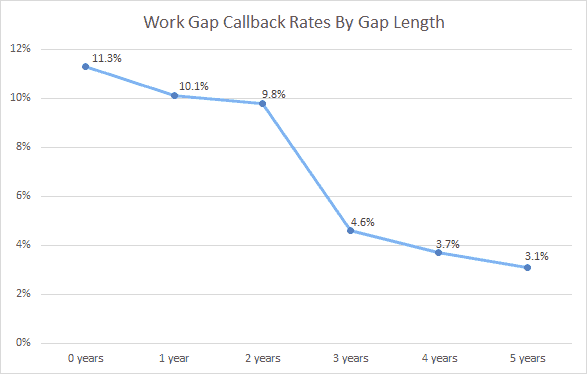
A 2019 study sent over 36,000 resumes to various job openings, each showing different work gaps.
The result?
Interview chances tanked if the gap was more than three years. And if you’re wondering how great the callback rate was for any application?
A whopping 11%.
Yep, you read that right.
Oh, and these were all online applications, which just reinforces my point: your job search strategy needs variety.
You can’t rely on hitting ‘submit’ and hoping for the best.
So, What Can You Actually Do?
Well, ignoring it or pretending it doesn’t matter won’t do you any favours.
In fact, explaining the gap can boost your chances by 60%. Fancy that!
The best way to explain it? With some training or education. Recruiters eat that stuff up.
If that’s not on the cards, don’t worry. Supporting family members is also well received, and raising kids can increase your chances too – though it does come with the potential for ‘parent bias.’ Fun times, right?
So, what did I say to the anxious parent who’s been out of the game for four years?
Knowing a bit about her previous job, I suggested she reach out to her old employer. She loved the role, and they valued her – which means they might be open to a part-time gig until her youngest heads off to full-time school.
It’s worth a shot.
Now, we wait to see what happens.
~Lisa
If you’re navigating a return to work and don’t know where to start, my resume template and membership can help you map a smarter way forward.